Emergency Board-Up vs Permanent Storm Repair: Understanding the Two Phases
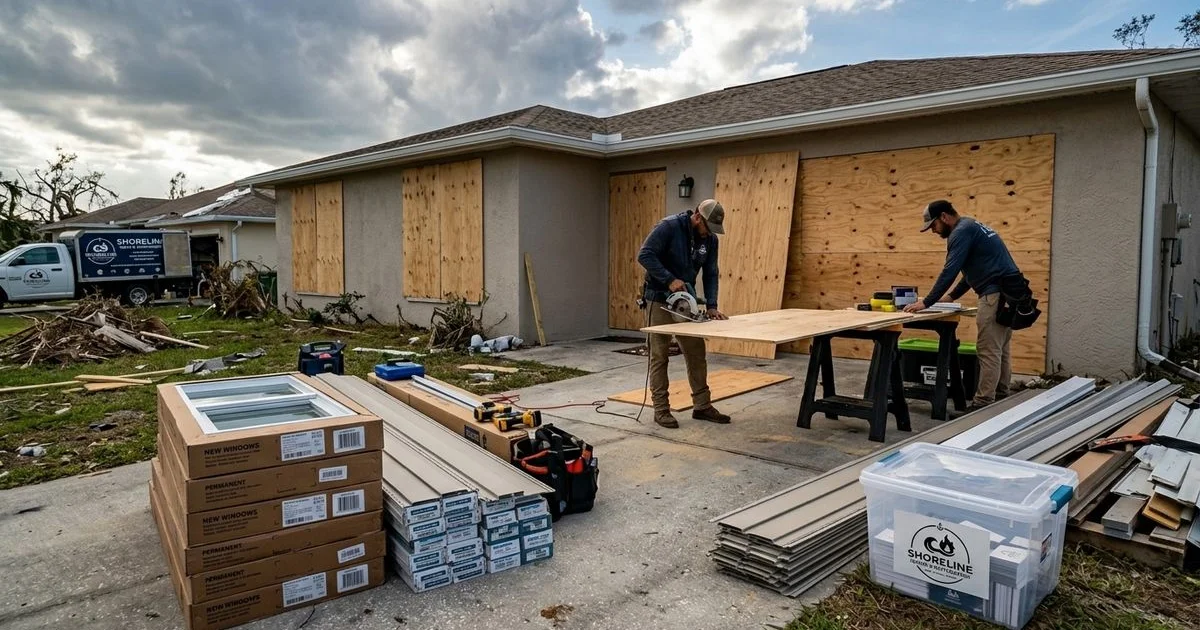
We see the same confusion every hurricane season as storm recovery specialists. Property owners often struggle to distinguish between immediate damage control and long-term rebuilding. Mastering emergency board-up vs permanent storm repair: understanding the two phases is the key to protecting your property and your insurance claim.
Our goal is to help you set realistic expectations. Clear communication with your insurance company prevents costly mistakes. We will break down exactly what each stage requires.
The focus will be on the timelines, the materials, and the strict rules governing the transition between them.
Phase 1: Emergency Board-Up and Tarping
Emergency board-up acts as a temporary protective shield installed immediately after a storm passes. It is damage prevention rather than a structural fix. Our crews prioritize sealing openings to stop rain, wind, and intruders from making the situation worse.
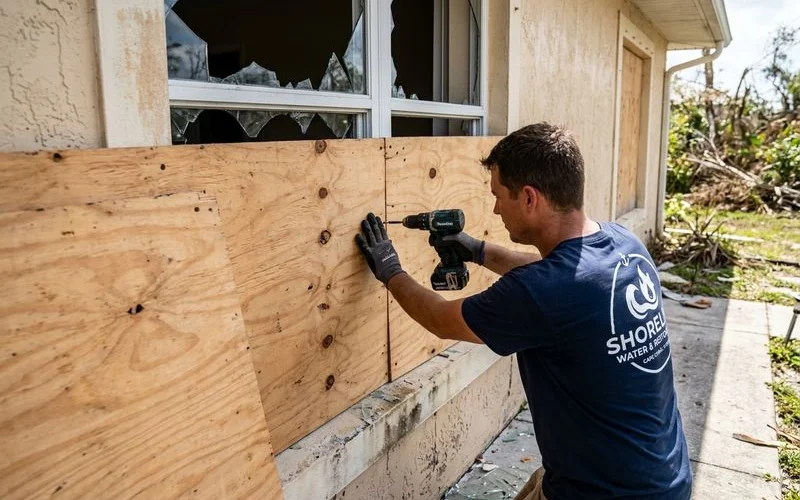
According to guidelines from the Federal Emergency Management Agency (FEMA), proper window protection requires 5/8-inch exterior grade CDX plywood. This specific thickness prevents the wood from breaking apart under severe wind loads.
The Immediate Response Timeline
Rapid response is the core objective of the first phase. Securing the property should happen within hours of the storm clearing.
What the emergency phase includes:
- Plywood panels (5/8-inch CDX) secured over broken windows and damaged doors
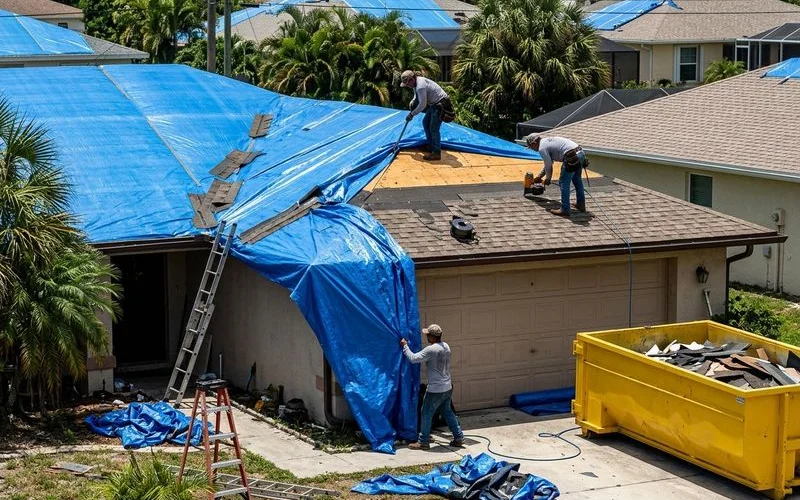
- Heavy-duty tarps fastened over compromised roof sections
- Temporary wooden bracing for weakened structural elements
- Immediate sealing of any opening exposed to the weather
What this phase does NOT include:
- Permanent window or door replacement
- Roof repair or shingle replacement
- Structural framing reconstruction
- Interior drywall repairs
Our team uses these temporary materials specifically to last for the weeks or months required to plan the permanent reconstruction. The plywood, tarps, screws, and battens will all be safely removed once final repairs commence.
Phase 2: Permanent Structural Repair
Permanent repair represents the full reconstruction phase. The reconstruction team removes damaged components and installs new materials that restore your property to pre-storm condition or better. Our licensed contractors manage this detailed process from start to finish.
This stage demands strict adherence to local building codes. The transition to the 2026 Florida Building Code requires specific upgrades for storm-damaged properties. One major requirement is the installation of a secondary water barrier, often called a sealed roof deck.
This secondary barrier provides a crucial layer of protection. If hurricane winds strip away the outer shingles, the sealed deck keeps water out of the house.
The Reconstruction Scope
Rebuilding begins only after the insurance claim scope is agreed upon and the local building department issues the necessary permits. This comprehensive phase can take weeks to months depending on the extent of the damage.
Key elements of permanent repair:
- Installation of impact-rated windows and doors
- Roof replacement featuring dual-layer underlayment and secondary water barriers
- Structural framing repair using code-compliant hardware
- Drywall replacement, insulation, and interior finishing
- New flooring installation
- Painting and trim restoration
- Permitted electrical and plumbing corrections
Why Both Phases Are Essential
Skipping the board-up phase to rush directly into permanent repairs is a dangerous strategy. Both stages serve distinct, critical functions in the recovery process. Our experience shows that bypassing emergency mitigation almost always leads to severe complications.
Your standard HO-3 homeowner insurance policy explicitly requires you to mitigate further damage. Leaving storm openings unprotected gives the insurance company grounds to deny coverage for any subsequent water intrusion. Emergency board-up legally satisfies this critical mitigation obligation.
The Threat of Rapid Mold Growth
Timing gaps between the storm and the repair make temporary protection mandatory. The insurance adjuster needs time to inspect the damage, and the permitting process in Lee County can take two to six weeks.
Leaving the structure exposed during this wait invites disaster. The Environmental Protection Agency (EPA) states that mold begins growing on damp indoor surfaces in just 24 to 48 hours. Florida’s extreme heat and humidity accelerate this process dramatically. A simple $500 tarp installation prevents thousands of dollars in secondary mold remediation and wood rot repair.
Emergency Board-Up vs Permanent Storm Repair: Understanding the Two Phases of Insurance
The billing process for these two distinct phases functions differently under your policy. Restoration companies usually bill emergency mitigation, which includes the board-up, separately from the permanent structural work. Our billing department submits the mitigation invoices immediately to keep your claim moving.
Insurance carriers fully expect and approve this emergency work. They prefer immediate board-ups because stopping the water intrusion prevents much larger interior claims. Policies frequently cover Phase 1 mitigation without applying your standard deductible.
Permanent reconstruction falls under your overall property damage claim. This second phase is subject to your policy’s coverage limits, standard deductibles, and any specific hurricane deductibles.
Simplified Claim Management
Both phases typically exist within a single insurance claim file. The restoration company simply documents and bills the two stages at different times.
| Phase | Coverage Type | Billing Timeline | Deductible Application |
|---|---|---|---|
| Phase 1: Emergency Board-Up | Emergency Mitigation | Billed immediately | Often not subject to standard deductible |
| Phase 2: Permanent Repair | Property Damage Claim | Billed upon finalized scope | Subject to policy/hurricane deductible |
Common Mistakes Between Phases
Managing the transition between emergency mitigation and final reconstruction requires caution. Property owners frequently make preventable errors that jeopardize their safety and their insurance payouts. Our project managers help clients avoid these costly traps.
Removing plywood or tarps too early is a major risk. You must leave temporary protections in place until the exact day the permanent materials are ready for installation. A sudden rainstorm during a gap in protection will cause severe interior damage.
The Dangers of Rushing the Process
Completing permanent repairs before the insurance adjuster completes their inspection is a severe misstep. The adjuster expects to see emergency mitigation, but they need to document the actual damage before final repairs obscure the evidence. Replacing a roof too early can make proving the original scope of damage impossible.
Another critical error is hiring unqualified personnel for the reconstruction phase. Florida Statute 489.127 classifies unlicensed contracting during a declared state of emergency as a third-degree felony. This law carries penalties of up to five years in prison and a $5,000 fine.
Always verify the credentials of anyone touching your property. You can confirm active licenses directly through the Florida Department of Business and Professional Regulation (DBPR) website before authorizing any permanent work.
The Single-Source Advantage
Working with a company equipped to handle both emergency board-up and permanent reconstruction eliminates dangerous coordination gaps. Using separate contractors often leads to communication failures and extended exposure times. Our emergency crews secure the property immediately, and the exact same organization manages the final build.
A unified restoration approach provides distinct advantages:
- Single point of accountability
- Faster transition between mitigation and rebuilding
- Reduced paperwork and insurance delays
- Consistent quality control from start to finish
Our licensed construction team (CGC1534410) seamlessly takes over the project once the initial board-up is complete at Shoreline Water & Restoration. Mastering emergency board-up vs permanent storm repair: understanding the two phases guarantees you make the right decisions when a storm hits.
Call (239) 268-8546 for immediate emergency board-up and professional storm damage restoration in Cape Coral. Our response teams are available 24/7 before, during, and after severe weather events.

Gary Stone
Regional Franchise Operator
Gary Stone co-operates the Shoreline Water & Restoration Cape Coral franchise, specializing in commercial restoration and hurricane damage recovery.
Need Emergency Restoration?
Shoreline Water & Restoration provides 60-minute emergency response in Cape Coral.
Call (239) 268-8546