How Fast Does Mold Grow After Water Damage in Florida?
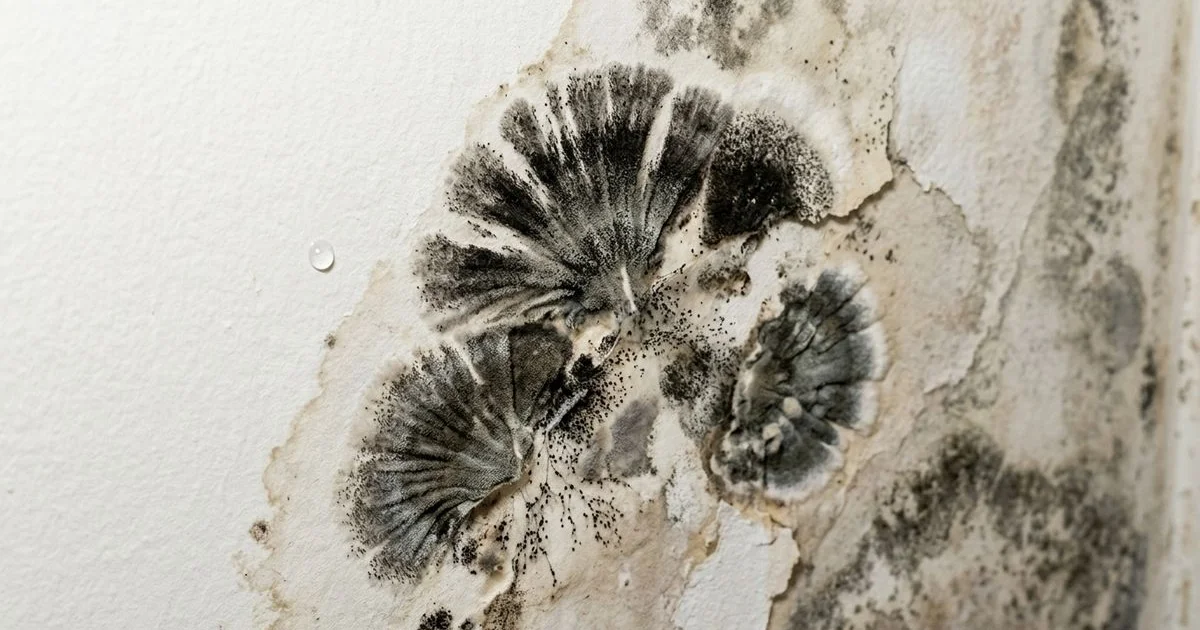
Our team sees it happen every week across Southwest Florida.
A minor leak goes unnoticed over the weekend, and by Monday, the wall is fully compromised by water damage. You might be wondering exactly how fast does mold grow after water damage in Florida?
We understand that managing moisture in this climate is a constant battle. The clock starts ticking the moment water hits a porous surface.
Our specialists rely on the ANSI/IICRC S520-2024 standard to assess these critical situations. National guidelines confirm that microscopic germination begins in just 24 to 48 hours.
This guide will break down the specific timeline of colonization and share actionable steps to protect your home.
The Mold Growth Timeline in Florida
Hours 0-24: Moisture Absorption
Water begins absorbing into building materials immediately upon contact. Drywall, wood, carpet, and insulation wick moisture to create damp conditions below the surface.
Our crews know that the threat is entirely invisible to the naked eye during this phase. The American National Standards Institute notes that 47% of US residential buildings already have visible mold or mold odor. Any new water intrusion simply feeds the spores that are naturally waiting in your home.
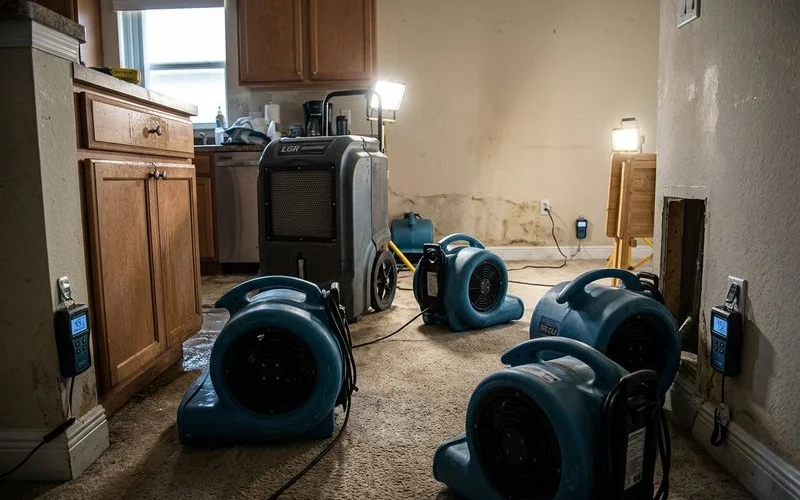
We use thermal imaging and moisture meters to find this hidden water before it becomes a problem. Finding the trapped moisture early prevents the structural damage that follows.
Hours 24-48: Spore Germination
Mold spores are always present in indoor and outdoor air as a normal part of the environment. Germination begins rapidly when these spores land on a damp surface.
Our experience shows that this is the most critical window for prevention. The Environmental Protection Agency recommends keeping indoor humidity between 30% and 50% to prevent growth. Temperatures between 60°F and 80°F act as an incubator, allowing spores to send out threadlike roots called hyphae.
We closely monitor relative humidity during this period to stop the roots from spreading.
Hours 48-72: Visible Colony Formation
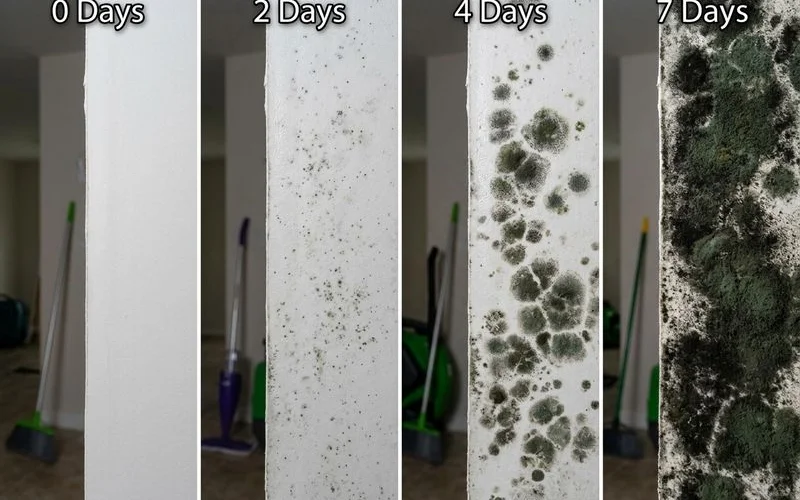
Colonies develop enough to appear as green, black, white, or gray patches of discoloration by the third day. Common indoor species like Cladosporium, Aspergillus, and Penicillium begin thriving on wet drywall.
Our remediation protocol shifts significantly once the growth becomes visible. The fungi are now producing their own spores, which become airborne and seed new colonies across the property. This rapid reproduction is exactly why immediate water extraction is so important.
We see secondary colonies form on furniture and clothing if the air is not filtered quickly.
Days 3-7: Rapid Proliferation
A small patch can expand to cover several square feet under favorable conditions. The invasion spreads through wall cavities, under flooring, and deep inside HVAC ductwork.
Our specialists frequently encounter massive fungal expansion if a property sits wet for a week. The Institute of Inspection, Cleaning and Restoration Certification classifies this severe stage as Condition 3, or Active Mold Growth. Finding the true source requires pulling back baseboards and inspecting hidden voids.
We use specialized negative air machines to contain the spores during this inspection.
Weeks 2+: Mature Infestation
Air quality drops noticeably, musty odors become persistent, and the scope of required work expands significantly. Professional intervention with negative air pressure and HEPA filtration is absolutely mandatory at this advanced stage.
We consider any unchecked growth past two weeks to be a mature infestation. The ANSI/IICRC S520-2024 standard clearly states that porous materials with active growth must be physically removed. Surface cleaning is no longer effective because the roots have penetrated too deeply.
Our teams must tear out the compromised drywall to restore a safe environment.
Why Florida Accelerates Mold Growth
Cape Coral presents a particularly challenging environment for property restoration. Several key elements work together to speed up the contamination process.
Our daily operations are entirely dictated by these local climate variables.
| Factor | Ideal Prevention Condition | Cape Coral Reality (2026 Data) |
|---|---|---|
| High Ambient Humidity | The EPA recommends 30% to 50% relative humidity. | Averages 74% year-round, peaking over 80% in the summer. |
| Temperature | Below 60°F or above 86°F slows reproduction. | Daily temperatures sit in the perfect 60°F to 80°F incubation zone. |
| Natural Drying | High airflow and low water table. | Flat terrain and a high water table limit natural evaporation. |
Modern building materials provide excellent food sources for these spores. Drywall paper, wood framing, and carpet backing contain the exact organic matter needed for survival.
We constantly fight against the unique environmental factors in Southwest Florida. Without commercial dehumidifiers, building materials simply cannot dry fast enough.
The Critical First 24 Hours
The first 24-hour window offers your best opportunity to stop the damage completely. Effective professional intervention extracts the water and lowers moisture levels below the danger threshold.
Our project managers always explain the drastic difference in scope and pricing to homeowners. The situation shifts from basic water extraction to full-scale remediation if you miss this window. A popular insider tip is to avoid using bleach on wet drywall.
We warn clients that bleach is over 90% water and will actually feed the roots inside porous materials rather than killing them.
- Early Water Mitigation (0-24 hours): Costs typically range from $1,500 to $5,000 for extraction and rapid structural drying.
- Full S520 Mold Remediation (48+ hours): Costs escalate to $4,000 to $15,000+ due to the need for physical tear-outs, containment barriers, and independent clearance testing.
Waiting even one extra day guarantees a much higher bill and displaces your family for weeks.
Our priority is always to save your existing materials whenever possible.
Conditions That Accelerate Mold in Your Home
Certain factors will push the timeline much faster than the typical 48 hours. Your daily habits and home maintenance play a massive role in this process.
We frequently inspect homes where specific indoor conditions have poured gasoline on the fire.
- HVAC system failures: If your air conditioner loses power, indoor humidity spikes rapidly.
- Improper thermostat settings: Setting the AC fan to “ON” instead of “AUTO” constantly blows wet air back into the house.
- Poor ventilation: Closets and bathrooms without exhaust fans trap moisture to create perfect microenvironments.
- Previous water events: Areas with past leaks often harbor dormant spores that reactivate instantly when moisture returns.
- New construction materials: Fresh drywall paper is highly susceptible to colonization compared to older, drier materials.
Fixing these basic issues is a simple way to protect your property.
Our team always checks these common failure points during an initial assessment.
What to Watch For
Even a tiny plumbing drip under the kitchen sink can trigger a massive problem. You must learn to recognize the secondary signs of trouble before a colony becomes visible.
We advise every homeowner to stay highly vigilant after any water intrusion.
Watch for these early indicators:
- A persistent musty or earthy odor near the water source.
- Discoloration or yellow water stains on walls, ceilings, and baseboards.
- Peeling paint or bubbling wallpaper.
- Warping and softening of drywall panels.
- New respiratory symptoms like coughing or sneezing that only happen while you are inside.
Early intervention follows the ANSI/IICRC S520-2024 guidelines to protect your property safely and legally. You will save thousands of dollars by addressing the moisture before it spreads into your HVAC system.
We urge you to call for a professional assessment immediately if you notice any of these signs.
Conclusion
Understanding how fast does mold grow after water damage in Florida is your best defense.
We know how stressful it is to discover standing water in your living room.
Taking immediate action minimizes the disruption to your life.
Our experts are ready to extract the moisture and secure your property within that critical 24-hour window.
Call (239) 268-8546 for an emergency response in Cape Coral today.

Paul Breehne
Regional Franchise Operator
Paul Breehne is a Regional Franchise Operator for Shoreline Water & Restoration in Southwest Florida, bringing over a decade of hands-on restoration experience to the Cape Coral market.
Need Emergency Restoration?
Shoreline Water & Restoration provides 60-minute emergency response in Cape Coral.
Call (239) 268-8546