
How Long Does Biohazard Cleanup Take? Timelines by Situation
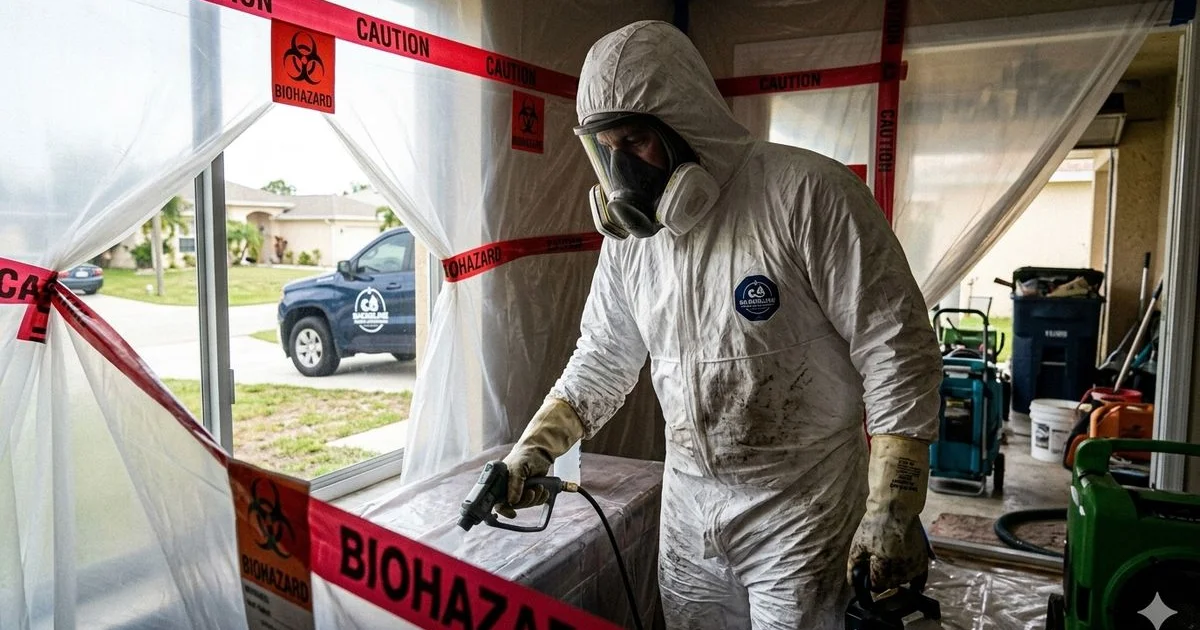
We often see property owners caught off guard by the disruption of a sudden biohazard event. Asking “How Long Does Biohazard Cleanup Take? Timelines by Situation” is really a question about when your life can return to normal. Understanding the timeline for professional biohazard cleanup helps you manage temporary displacement and set realistic expectations.
Our professional service team handles these challenging scenarios daily across the US.
Let’s look at the actual data behind these timelines and explore practical ways to respond.
How Long Does Biohazard Cleanup Take? Timelines by Situation Type
Small-Area Blood Cleanup: 2-6 Hours
Our process for contained incidents involving blood on a small area of non-porous surfaces moves quickly. The initial phase involves donning protective gear. This step complies with the OSHA Bloodborne Pathogens Standard 29 CFR 1910.1030. We treat all biological material using universal precautions to ensure total safety.
The specific breakdown looks like this:
- Setup and PPE donning: 30 minutes
- Blood and biological material removal: 1-2 hours
- Disinfection with EPA-registered hospital-grade products: 1-2 hours (including dwell time)
- Verification and cleanup: 30-60 minutes
Our technicians use hospital-grade disinfectants with specific dwell times to guarantee sanitation. If the blood has soaked into porous materials like carpet or drywall, the timeline extends. Contaminated materials must be removed completely rather than just wiped down. We strongly recommend expecting an additional 2 to 4 hours for material demolition and aggressive decontamination.
Trauma Scene Cleanup: 4-12 Hours (Cleanup Phase)
We dedicate a full day to trauma scenes involving significant blood across a larger area. Scene assessment and planning require 30 to 60 minutes. Containment setup takes another 30 to 60 minutes. Our technicians then spend 2 to 4 hours removing the biological material.
Material demolition for ruined carpet or flooring adds 1 to 3 hours. Multi-step decontamination requires 2 to 4 hours.
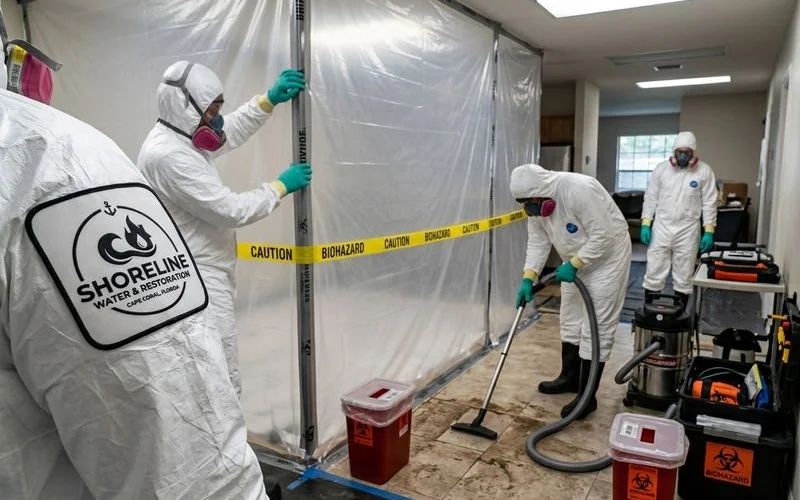
We finish the initial cleanup phase with odor treatment and verification testing, taking about 1 to 3 hours. To prove the surface is truly safe, technicians use ATP (Adenosine Triphosphate) testing. The luminometer must show a reading below 10 RLU (Relative Light Units) to pass the strict sanitation benchmarks used in medical facilities. Our standard protocol requires another round of cleaning if any reading exceeds that limit.
If reconstruction is needed for drywall or painting, add 2 to 5 days depending on the scope. The cleanup and reconstruction phases usually occur on separate days.
Unattended Death Cleanup: 1-3 Days
Our teams consider unattended death situations to be among the most difficult biohazard cleanups due to decomposition effects. The extended duration of the situation causes biological fluids to penetrate deeply into the building structure. Summer temperatures in places like Cape Coral accelerate this breakdown process significantly.
Day 1: Emergency Cleanup (6-10 Hours)
We begin with a complete scene assessment and bio-safety evaluation. Technicians set up containment barriers and negative air pressure systems. Removal of biological material and contaminated contents happens next. Our crew then demolishes contaminated building materials like carpet padding and drywall.
Initial decontamination of structural surfaces finishes the first day.
Day 2: Deep Decontamination (4-8 Hours)
We apply a second-pass cleaning using targeted enzymatic products. Hospital-grade disinfectants require extended dwell times to work effectively. The team treats concrete and wood structures that absorbed decomposition fluids. Our odor treatment process utilizes HEPA air scrubbing and hydroxyl generators.
Hydroxyl technology neutralizes persistent decomposition odors safely without leaving harmful chemical residues behind.
Day 3: Verification and Reconstruction Prep (2-4 Hours)
We perform final ATP testing to verify complete decontamination. Final odor verification ensures the space smells neutral and clean. Area preparation for reconstruction happens last. Our in-house builders usually add 3 to 7 days to the timeline for replacing drywall and flooring.
Factors Extending the Timeline
Multi-room contamination extends the schedule significantly. HVAC system contamination from decomposition gases requires specialized duct cleaning. We utilize longer treatment cycles for concrete slab absorption because concrete acts like a hard sponge and pulls fluids deep into its pores.
Hoarding Cleanup: 2-10+ Days
Our timelines for hoarding cleanup vary enormously based on the property size and severity. A 2024 report by the U.S. Senate Special Committee on Aging estimates that hoarding disorder affects over 6% of older adults. Professionals assess these situations using the Clutter Image Rating scale, which ranks rooms from Level 1 to Level 9.
Mild Hoarding (1-2 Days)
We handle mild hoarding situations relatively quickly because pathways still exist. Surfaces remain accessible even though they are covered with items. The process involves cleaning, sorting, and sanitizing specific areas. Our biohazard treatment focuses only on isolated spots.
Moderate Hoarding (3-5 Days)
Moderate hoarding requires 3 to 5 days because rooms are significantly filled. Some areas become completely inaccessible to the property owner. Our technicians perform extensive sorting and remove large amounts of waste. The crew applies biohazard treatments to areas contaminated with pet waste or pest evidence.
Severe Hoarding (5-10+ Days)
We block out a week or more for severe situations scoring an 8 or 9 on the Clutter Image Rating scale. Entire rooms contain floor-to-ceiling items that pose serious structural weight concerns. The property requires systematic room-by-room clearing and a thorough structural assessment. Our final steps include deep cleaning, decontamination, and potentially reconstructing damaged surfaces.
Sewage Backup Cleanup: 1-5 Days
Our sewage cleanup timelines depend heavily on the volume of waste and the affected area. The ANSI/IICRC S500 standard classifies raw sewage as Category 3 water. This grossly contaminated water contains pathogenic agents, viruses, and harmful bacteria that require aggressive removal.
Small Sewage Backup (1-2 Days)
We can usually resolve a small backup in one or two days. These incidents are typically limited to a single bathroom or utility area. The process requires immediate extraction and demolition of contaminated porous materials. Our technicians finish by decontaminating the space and setting up initial drying equipment.
Large Sewage Backup (3-5 Days)
Large backups involving multiple rooms or significant flooding demand much longer timelines. Technicians perform extensive extraction and widespread demolition throughout the affected area. Our site managers require multi-step decontamination to eliminate Category 3 pathogens. The structural drying process continues for 3 to 5 additional days after the physical cleanup is complete.
Factors That Affect All Biohazard Timelines
We evaluate several universal variables that impact every restoration schedule. The size of the affected area directly dictates how long containment setup and material removal will take. The number of affected rooms also matters significantly. Our teams must build separate containment zones and run distinct verification tests for each room.
Multi-room contamination extends timelines exponentially. Odor complexity plays a major role during severe hoarding or unattended death scenarios. Our specialized equipment often runs multiple treatment cycles to fully eliminate persistent smells.
| Material Type | Porosity Level | Cleanup Action Required | Estimated Time Impact |
|---|---|---|---|
| Tile & Glass | Non-Porous | Surface disinfection and wiping | Very Fast (1-2 hours) |
| Hardwood Flooring | Semi-Porous | Aggressive scrubbing or removal | Moderate (3-6 hours) |
| Concrete Slabs | Porous | Deep enzyme soaking and extraction | Slow (1-2 days) |
| Carpet & Drywall | Highly Porous | Complete demolition and disposal | Very Slow (2-4 days) |
Penetration depth heavily influences the final estimate. Biological material on a non-porous surface like tile cleans up much faster than fluids soaked into wood subflooring. Our deep penetration protocol requires material removal rather than basic surface cleaning. Strict guidelines demand the disposal of any carpet, padding, or insulation that contacts biohazard material.
What Happens After Cleanup
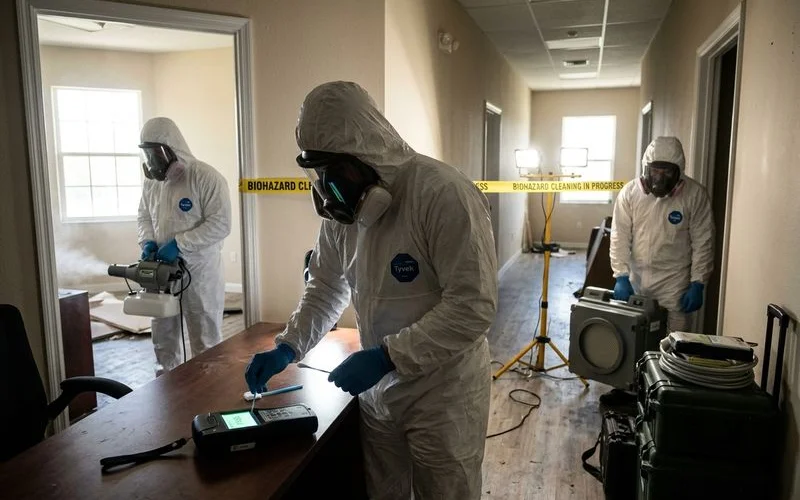
We separate the project into two distinct phases: cleanup and reconstruction. Biohazard cleanup specifically addresses and removes the contamination. Reconstruction addresses the physical property and restores its value. Our licensed Florida builders handle all reconstruction in-house.
- Drywall replacement where contaminated sections were removed
- Subflooring replacement if biological material penetrated the subfloor
- Flooring installation (carpet, tile, or vinyl to replace removed materials)
- Painting of new and cleaned surfaces
- Cabinet and fixture replacement if contamination necessitated removal
Complete continuity from the initial emergency call through the final restoration ensures a smooth process. Reconstruction timelines vary from 1 day for simple finishes to several weeks for involved, multi-room projects.
Planning for Displacement
We know that leaving your home during a cleanup is highly stressful. You will likely need to stay elsewhere while the crew works. Small incidents taking 2 to 6 hours usually allow you to return the exact same day. Our moderate cleanups taking 1 to 3 days require you to plan for 2 to 5 days away from home.
Major cleanups with reconstruction require 1 to 3 weeks of displacement. Standard US homeowners insurance policies often include Additional Living Expenses coverage. Our billing department often sees Additional Living Expenses pay for temporary housing, meals, and related costs during this displacement period.
Conclusion
We hope this guide gives you clarity during a difficult time. Knowing “How Long Does Biohazard Cleanup Take? Timelines by Situation” helps you prepare for the days ahead. A fast response limits damage and gets your family back home sooner. Our confident team is ready to restore your property and your peace of mind.
Call (239) 268-8546 for biohazard cleanup in Cape Coral. Confidential, compassionate service is available 24/7.

Paul Breehne
Regional Franchise Operator
Paul Breehne is a Regional Franchise Operator for Shoreline Water & Restoration in Southwest Florida, bringing over a decade of hands-on restoration experience to the Cape Coral market.
Need Emergency Restoration?
Shoreline Water & Restoration provides 60-minute emergency response in Cape Coral.
Call (239) 268-8546